
"When the acute load dramatically exceeds the chronic load, injury risk rises."
Injury rarely arrives without warning.
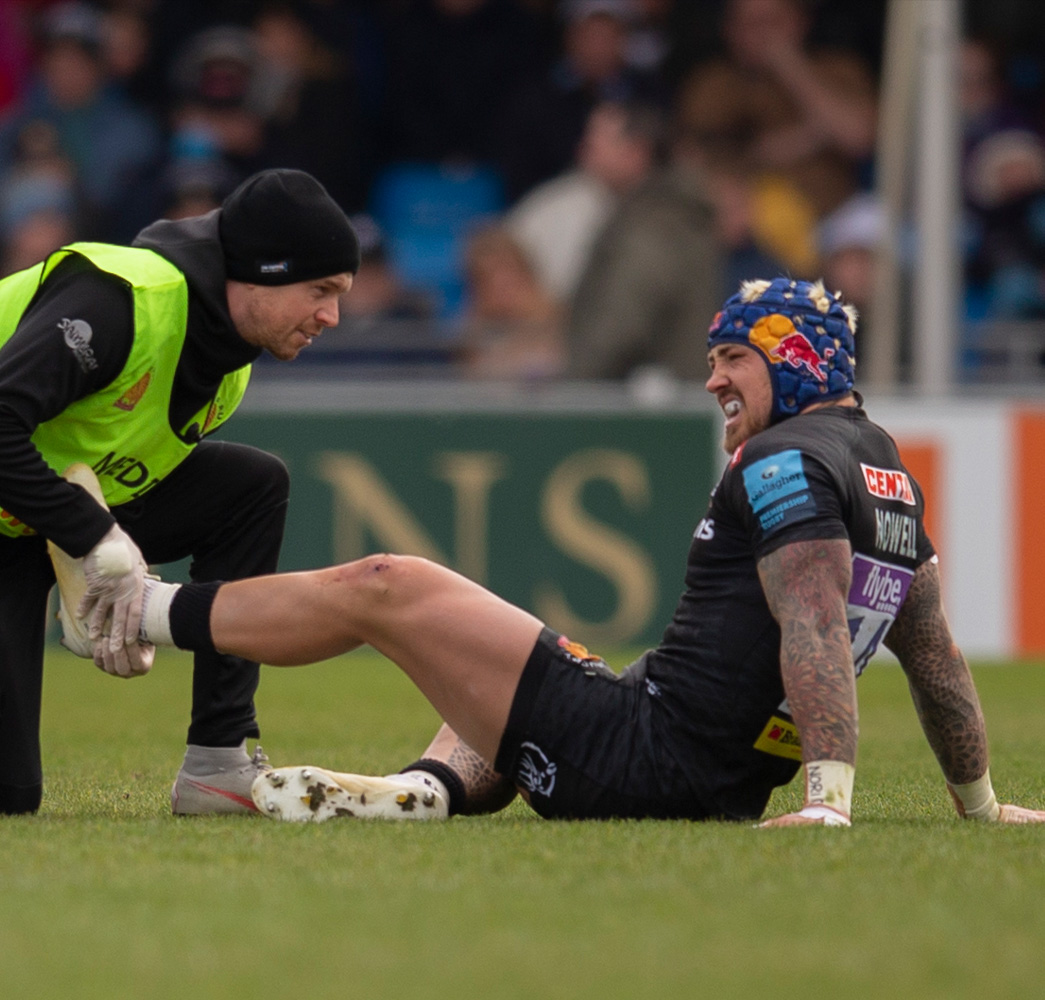
It might feel sudden - a calf tightening mid-session, a hamstring grabbing at top speed - but in most cases, tissue failure has been building quietly for weeks.
Modern performance environments have shifted from reacting to injuries to trying to predict them. And at the centre of that shift sits one concept: load.
Dr Tim Gabbett, whose research has influenced professional sport across codes, has framed the conversation clearly: "It’s not load that injures athletes. It’s inappropriate load."
That sentence has become foundational in high-performance departments.

Load, in itself, is not the enemy. Training creates stress, and stress creates adaptation. But when stress increases too quickly - or drops too low before spiking again - tissue capacity is exceeded.
THE ACUTE:CHRONIC DEBATE
One of the most discussed models in load monitoring is the acute:chronic workload ratio (ACWR).
The basic premise is simple:
Acute load = what you’ve done this week
Chronic load = what you’ve averaged over the past three to six weeks
When the acute load dramatically exceeds the chronic load, injury risk rises.
Gabbett’s earlier research suggested that athletes who maintained a steady build in chronic load were more resilient than those oscillating between under-training and sudden spikes.

However, the model has also attracted criticism. Some researchers argue that injury prediction cannot be reduced to a single ratio and that oversimplified thresholds may create false confidence.
Which highlights something important: monitoring tools support judgement - they don’t replace it.
INTERNAL VS EXTERNAL LOAD
Elite sport now distinguishes between two broad categories:
External load: distance covered, sprint metres, accelerations and decelerations, and total volume lifted
Internal load: heart rate response, rate of perceived exertion (RPE), heart rate variability (HRV), sleep quality, and mood state
Two athletes can complete identical external work and experience very different internal responses.
That’s where context becomes essential.
Dr Shona Halson, a leading recovery and sleep researcher who has worked with Olympic teams, has repeatedly emphasised the need to integrate monitoring across domains. In interviews discussing athlete management, she has highlighted that sleep, psychological stress and training stress are interrelated - and that recovery monitoring must consider all three.
An athlete under travel stress may present suppressed HRV, elevated resting heart rate and poor sleep - even if training volume hasn’t changed.
Load monitoring isn’t about tracking numbers. It’s about tracking trends.
THE WARNING SIGNS COACHES WATCH
In practical settings, performance staff look for subtle signals before injury appears:
- Declining jump height on force plates
- Reduced sprint output at similar effort
- Elevated perceived exertion for routine sessions
- Mood disturbances
- Sleep disruption
These markers often precede soft-tissue injuries.
In football and rugby environments, some clubs now combine GPS sprint exposure with subjective wellness questionnaires each morning. A drop in subjective readiness paired with a spike in high-speed metres becomes a red flag.
The aim is not to eliminate risk - which is impossible in explosive sport - but to avoid preventable overload.

THE PSYCHOLOGY OF OVERTRAINING
Load is not purely mechanical.
Athletes often push through early warning signs because selection pressure, contracts and competition schedules demand availability.
Former NBA performance director Mike Mancias has spoken publicly about balancing objective data with athlete self-awareness, stressing that communication is central to prevention.
Monitoring works best when athletes feel safe reporting fatigue honestly - without fear of appearing weak.
A suppressed HRV reading is useful. An honest conversation is often more powerful.
WHERE MONITORING FAILS
Monitoring systems fail when:
- Data becomes performative rather than functional
- Coaches override recovery signals routinely
- Athletes obsess over metrics without understanding them
- Technology replaces communication
Wearables are now ubiquitous. But without interpretation, they risk creating noise.
Stephen Seiler has often spoken about simplicity in endurance programming, emphasising that most sessions should be deliberately controlled rather than maximally taxing. That philosophy indirectly supports load management: fewer extreme peaks, more consistent accumulation.
Consistency protects tissue.
A SMARTER FRAMEWORK
Rather than chasing perfect ratios, many high-performance environments now use three guiding principles:
1. Build chronic load gradually
2. Avoid sudden spikes in sprint or eccentric exposure
3. Adjust intensity when internal fatigue markers declineIt’s less algorithmic than many assume.
Load management is about pattern recognition over time.
PREVENTION OVER REHABILITATION
Injury prevention does not generate headlines. It generates availability.Athletes who remain available across seasons tend to accumulate more meaningful training than those cycling through rehabilitation blocks.
Load monitoring, when used intelligently, shifts the goal from 'how much can we add?' to 'what can the athlete tolerate today?'
The difference between those two questions is subtle - but decisive.
Over time, the athletes who respect progressive load often find themselves on the field when it matters most.